
Imagine this: It is April of your senior year. You are sitting at your desk with two browser tabs open. One is an acceptance from Yale. The other is a full-ride scholarship to your local state flagship.
One offers a name that people recognize from Tokyo to Timbuktu. The other offers a degree with zero debt and a weekend at the campus stadium that you will actually remember. In 2026, this is not just a choice of where to spend four years. It is a $400,000 financial decision that will shape your entire twenties.
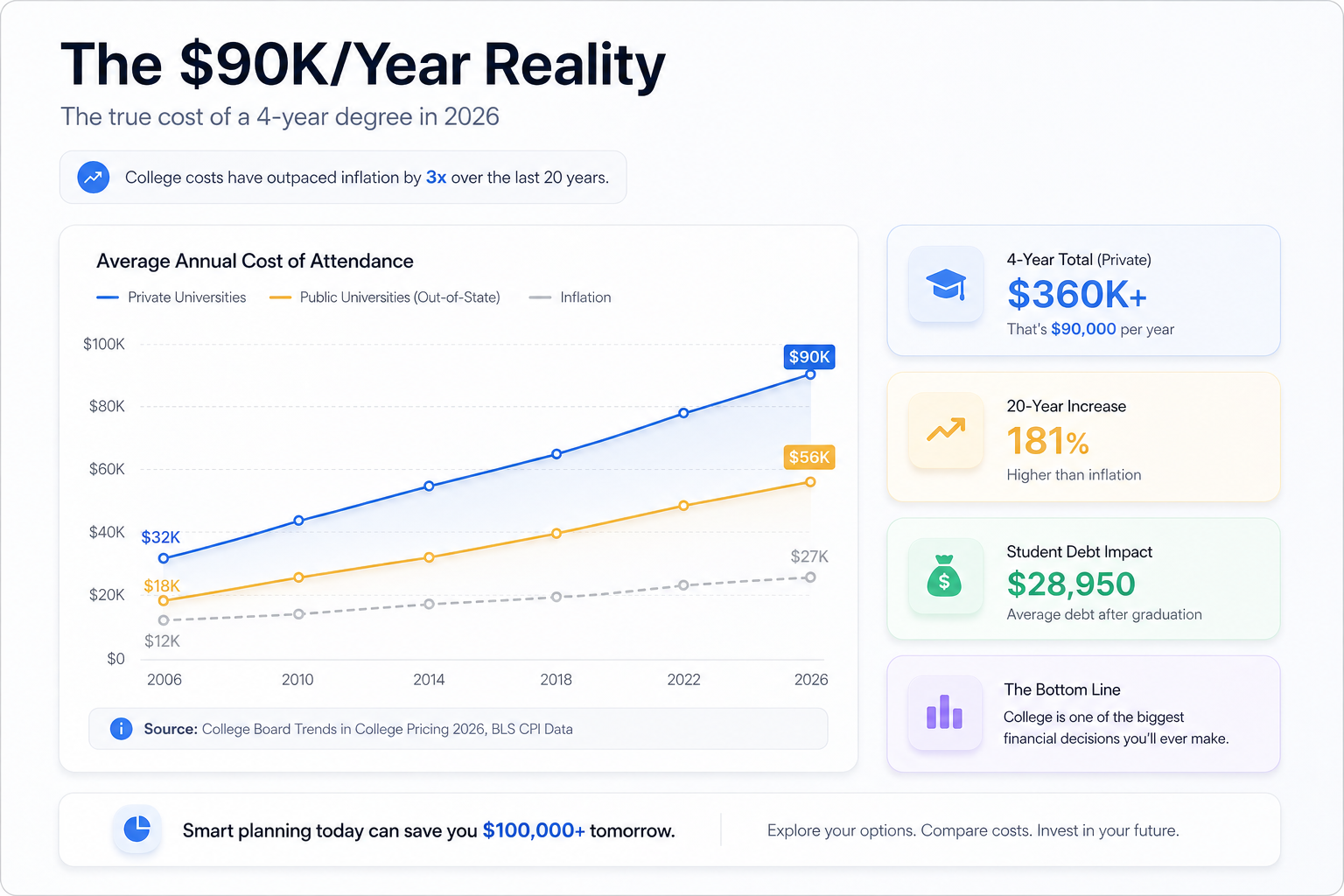
Real talk: the "prestige" of the Ivy League has never been under more pressure. With tuition at elite private schools now pushing past $90,000 a year, students are finally asking the hard question: Is the name on the sweatshirt worth the price of a house?
The "Sticker Price" Lie: Why Ivies Can Be Cheaper
Before you write off the Ivy League as "too expensive," you need to understand how the 2026 financial aid game works. Most people look at the sticker price, the terrifying $94,000 annual total for tuition, room, and board, and close the tab immediately.
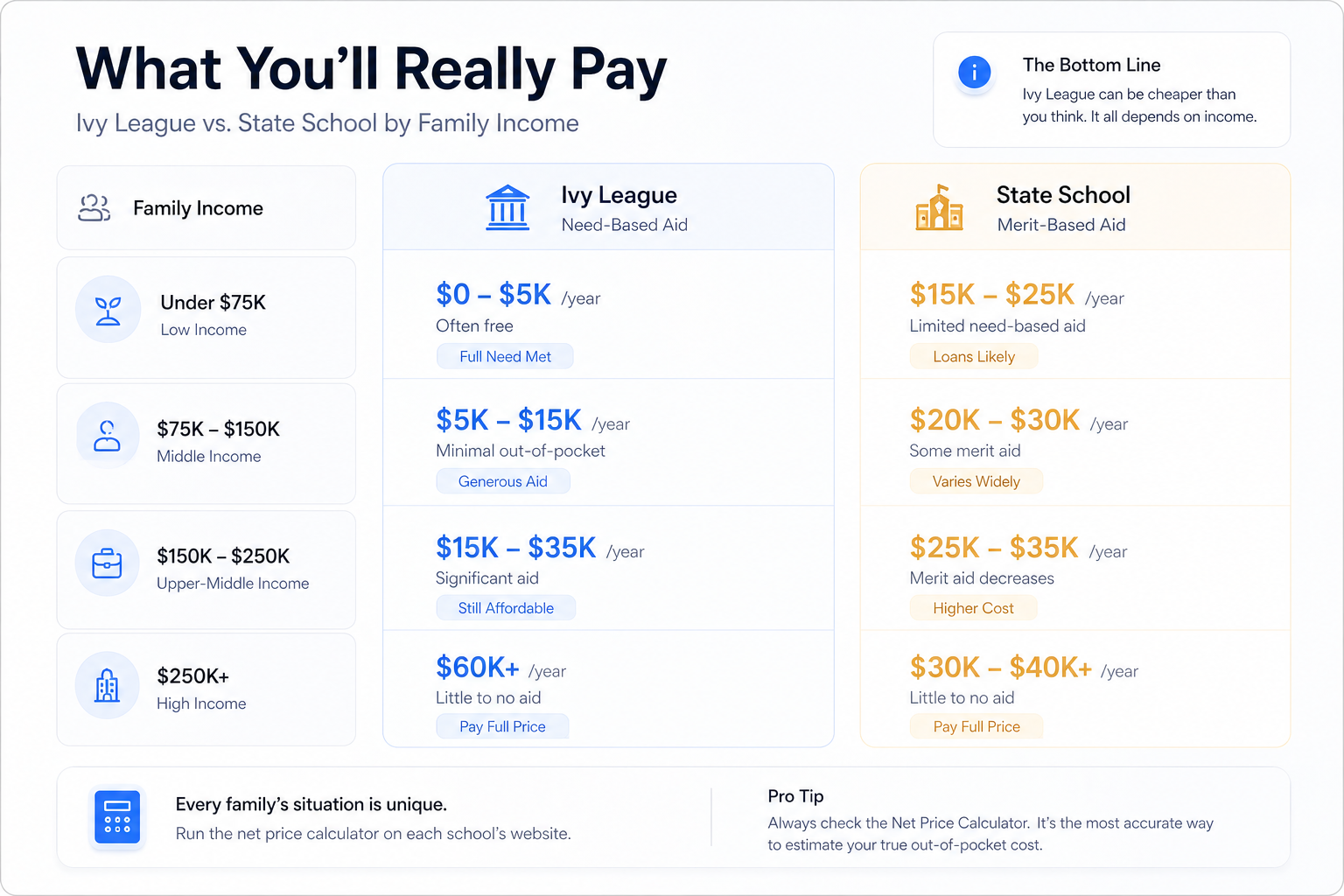
Here is the deal: if your family earns a middle-class or lower-middle-class income, an Ivy League school might actually be the cheapest option on your list.
- Harvard and Yale: Families making under $75,000 to $100,000 typically pay $0 to attend.
- Columbia and Dartmouth: Students from families earning less than $125,000 to $150,000 often pay zero tuition.
- No-Loan Policies: Most Ivies have replaced student loans with grants that you never have to pay back.
Meanwhile, a top-tier state school for an out-of-state student can cost between $45,000 and $80,000 per year with very little need-based aid. In 2026, it is entirely possible that going to Harvard is cheaper than going to a state school in a different time zone.
The "Fat Tail" Effect: What You Are Actually Buying
If you are paying full price, what exactly are you buying? It is not a "better" education. A Calculus II class at the University of Michigan is effectively the same as a Calculus II class at Princeton.
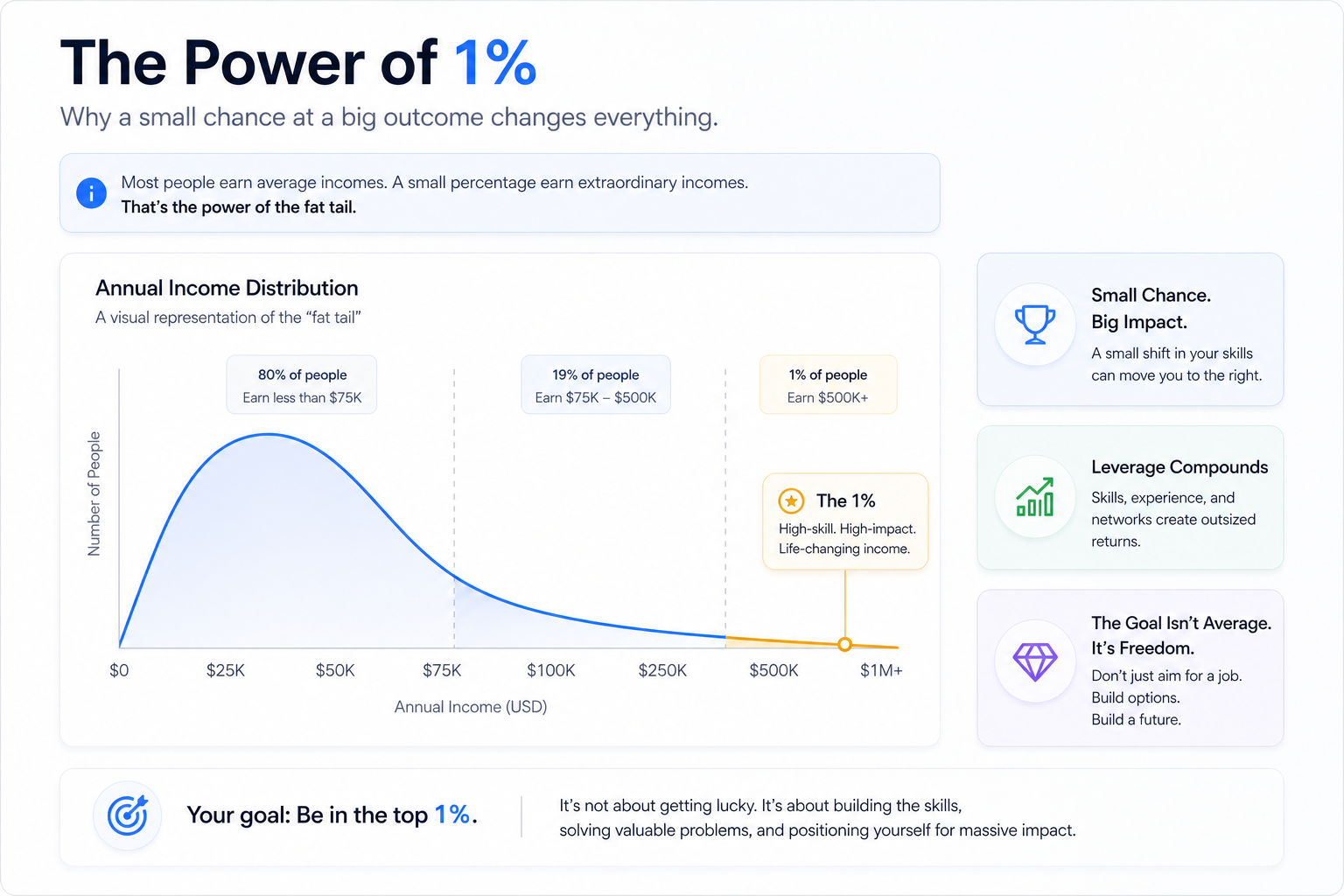
What you are buying is a "fat tail" outcome. Research shows that for the average student, graduating from an elite school does not drastically change your mid-career salary. However, it drastically increases your chances of hitting the top 1%.
- The CEO Pipeline: Harvard, Cornell, and UPenn lead the world in producing Fortune 500 CEOs.
- The Gatekeeper Industries: If your goal is high-end investment banking at Goldman Sachs or management consulting at McKinsey, these firms still recruit heavily from a specific list of target elite schools.
- The Network: You are paying for the person sitting next to you in the library whose dad is a Senator or whose mom just sold a tech unicorn for a billion dollars.
Where State Schools Win: The "Public Ivy" Power
For some careers, the Ivy League is actually a distraction. In 2026, "Public Ivies" like UC Berkeley, Georgia Tech, and the University of Texas at Austin are seen as the gold standard in specific fields.
- STEM and Tech: Engineering and Computer Science programs at schools like Georgia Tech or Berkeley often have more funding and better research facilities than some Ivies.
- Accounting and Finance: Public universities in the Big Ten produce more sitting CFOs than Ivy League schools do. Public schools often have more robust, specialized accounting programs.
- Research Output: Because of their massive size and state funding, many flagship public universities produce more total research output than the entire Ivy League combined.

The Hidden Cost of Debt and Mental Health
Let us talk about the vibes of debt. In 2026, starting your life with $200,000 in student loans for a degree in the Humanities is a heavy weight to carry. It limits your ability to take a cool internship, move to an expensive city like New York or London, or start your own business.
State schools are the engines of the American middle class. They offer a social safety net because your peer group is more economically diverse. At an Ivy, the pressure to maintain a certain lifestyle can be crushing if you are there on a full scholarship while your friends are flying to the Swiss Alps for spring break.

The Undergrad Vibes Decision Matrix
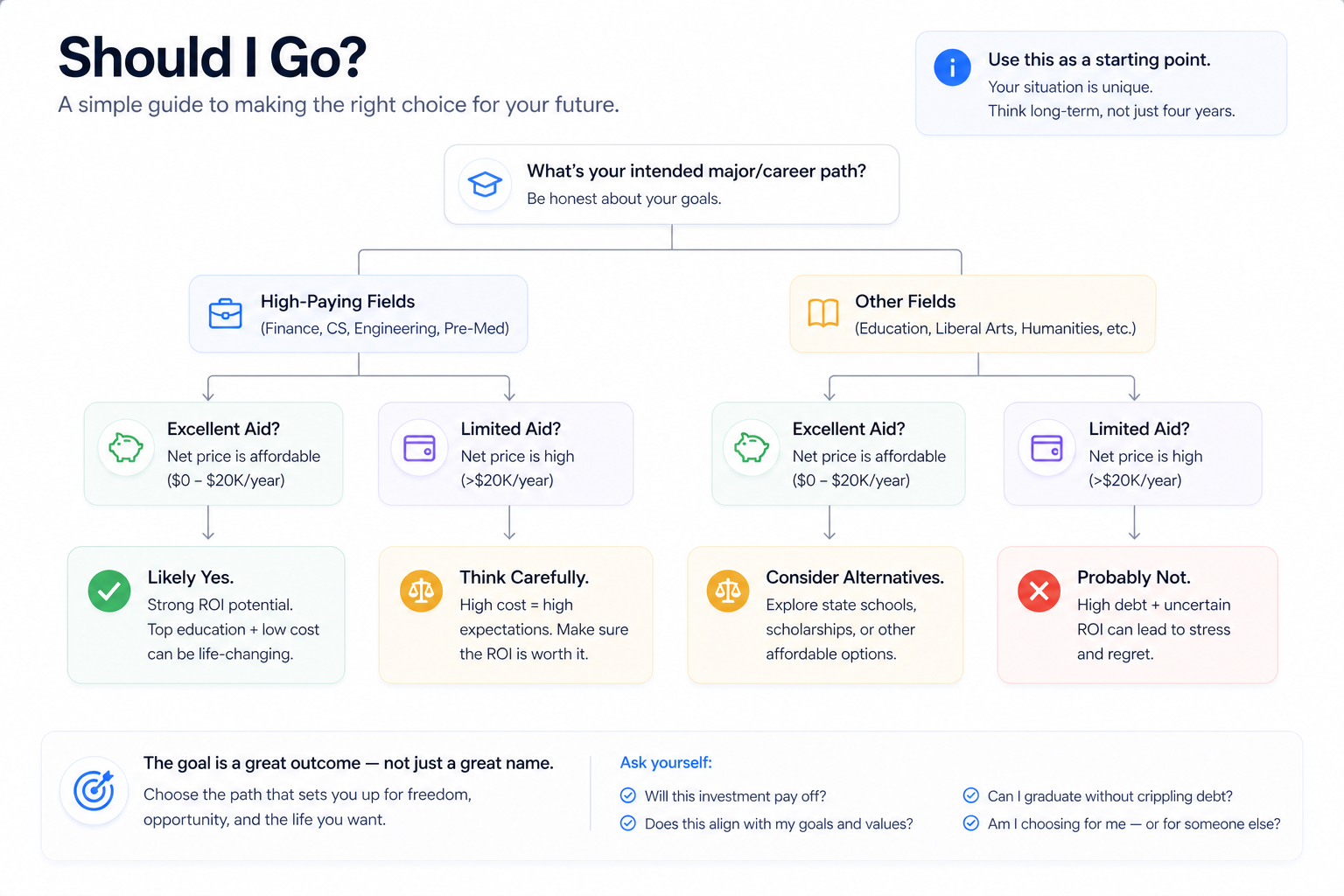
So which one is worth it? Use this logic to make your call.
Choose the Ivy if:
- You get enough financial aid to make it cheaper than a state school.
- Your goal is a "gatekeeper" industry like Private Equity or Diplomacy.
Choose the State School if:
- You want to be a doctor, engineer, or accountant where your graduate degree or professional certification matters more than your undergraduate brand name.
- You can attend for free or at a significantly lower cost. Starting your career with $0 in debt is a massive competitive advantage in your twenties.
The ROI Breakdown: A Side-by-Side Look
The honest answer is that both paths can lead to great outcomes. The difference is how much of your future income you are mortgaging to get there.
If you graduate from a state school debt-free and invest what you would have spent on tuition, compound interest does the rest. If you graduate from an Ivy with the right connections and land a $200,000 starting salary in finance, the debt pays itself off in two or three years.
The math works both ways. The mistake is choosing one without doing the math at all.

Final Thoughts
The name on your diploma can open the door, but it cannot sit in the chair and do the work for you. In 2026, the "best" school is the one that gives you the highest ROI without sacrificing your mental health or your financial future.
Run the numbers for your specific situation. Look at the net price after financial aid, not the sticker price. Think about the industry you are targeting, not just the name recognition. And remember: some of the most successful people you will ever meet graduated from schools you have never heard of.
Want more deep dives like this one? Join the Undergrad Vibes newsletter for the latest university rankings, career hacks, and money moves delivered to your inbox every week.