
Meet Alex. Alex is a sophomore who decided that this semester was the one. No more distractions. No more Friday night tailgates. No more three-hour dinners at the dining hall. He was going full "Study Monk."
For the first three weeks, it worked. He was ahead on his readings and his Notion dashboard was a masterpiece of productivity porn.
But by October, the walls started closing in. He was tired, irritable, and, ironically, his grades started to slip because he couldn't focus for more than ten minutes at a time. He had fallen into the classic undergrad trap: the belief that academic success requires social isolation.
Now meet Sarah. Sarah is in the same major, takes the same 18 credits, and is somehow at every birthday dinner and campus event. Yet when the Dean's List comes out, her name is always there.
Sarah isn't a genius. She just understands that in 2026, balance isn't a luxury. It's a survival skill.
The Science: Why Friends Actually Make You Smarter
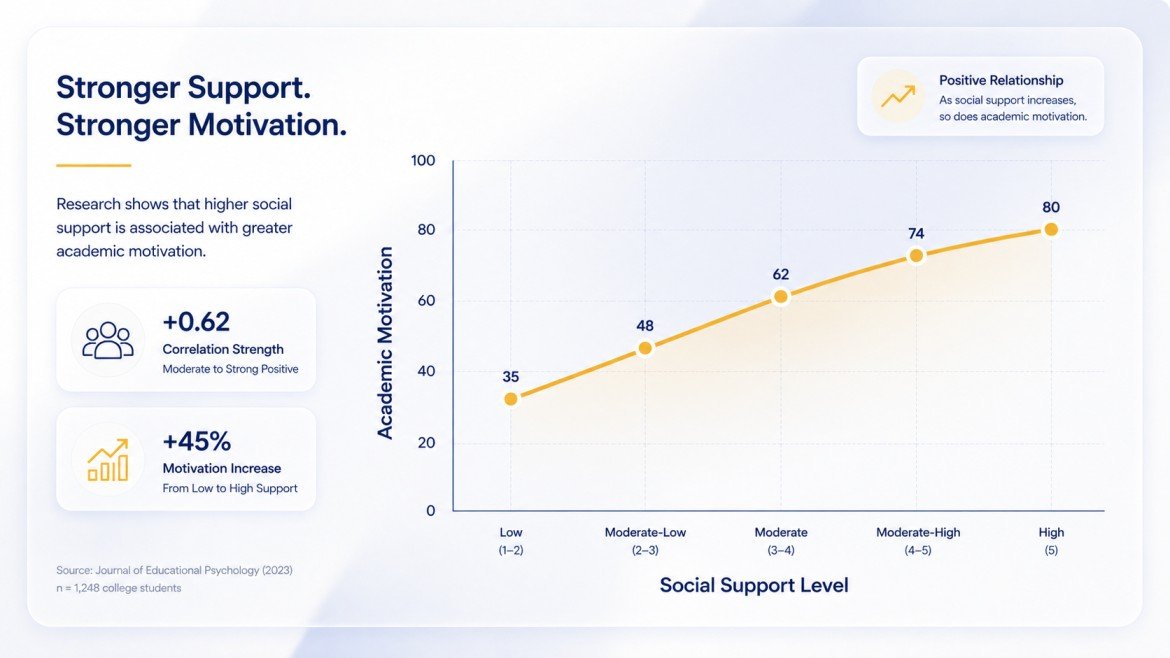
Most students treat social life and GPA as a zero-sum game. Every hour spent with friends is an hour "lost" from studying. But the research says otherwise.
Data shows that social well-being is one of the strongest predictors of academic motivation. When you have a solid support system, your brain produces less cortisol (the stress hormone) and more oxytocin, which helps with memory retention and creative problem-solving.
Here's what that actually means for your grades:
- The Information Flow: Students who socialize with classmates are more likely to hear about upcoming deadlines, "hidden" study resources, and professor expectations. Your social network is also an academic network.
- The Buffer Effect: Quality social support can reduce the impact of exam-related anxiety and burnout significantly. Students with strong social ties bounce back faster after a bad test.
- The Virtuous Cycle: High-performing students tend to find each other. When you socialize with people who also care about their grades, you naturally start picking up better habits without even trying.
The bottom line: total isolation doesn't make you a better student. It makes you a burnt-out one.
Mastering the 3-Box Rule
So how do you actually do it without burning out? You stop treating your day like a giant to-do list and start using the 3-Box Rule.
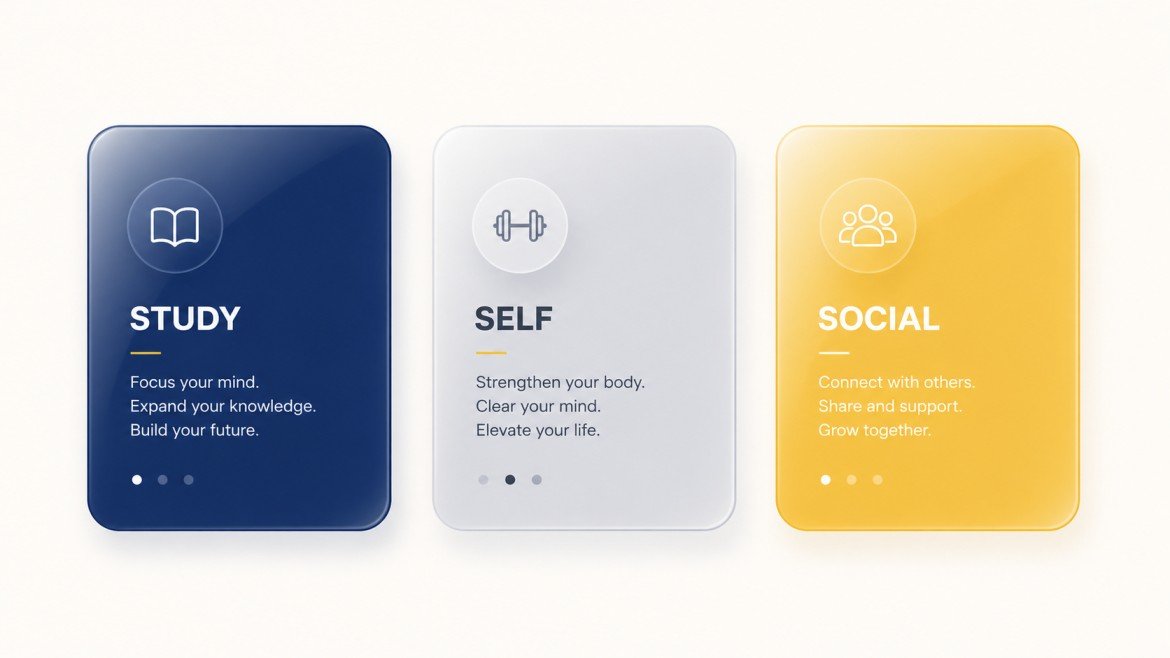
The idea is simple. Every day has three types of time, and you need to protect all three of them.
Box 1: The Study Box (High-Impact Deep Work)
This is not about how many hours you sit in the library. It's about how many of those hours are real, focused work. One hour of phone-free, active recall studying is worth four hours of passive highlighting while TikTok plays in the background.
The goal is quality over quantity. Block two to three hours of genuine deep work per day and you will outperform students who "study" for eight hours but retain nothing.
Box 2: The Self Box (Maintenance Mode)
This is the box students skip first, and it's the biggest mistake you can make. This box includes one to two hours for the gym, your hobbies, a walk outside, or just staring at the ceiling doing absolutely nothing.
It sounds unproductive. It isn't. Rest is what keeps Box 1 efficient. Skip it long enough and your focus collapses, your mood tanks, and suddenly you need six cups of coffee to do what one focused hour used to handle.
Box 3: The Social Box (The Guilt-Free Zone)
This box is mandatory. Not optional. Whether it's a party, a movie night, a dining hall dinner that runs two hours, or a late-night Taco Bell run, this time is protected.
Here's why it works: when you know you have a Social Box locked in at 8 PM, you are far more motivated to actually focus during your Study Box at 4 PM. The reward makes the work feel worth it.
The 3-Box Rule works because it gives your social life the same status as your academics. You don't "fit in" fun when school allows it. You build your day around both.
The Art of the "Lowkey No"
Real talk: you cannot attend every event. Part of balancing your life is learning how to protect your time without becoming a social pariah.
If your friends are heading out but you have a midterm tomorrow, don't just say "I can't go." That sounds like a permanent withdrawal from being a fun person.
Use the Lowkey No instead. Say something like: "I'm locking in tonight so I can be completely free for the game on Saturday. See you guys then!"
This does two things. First, it frames your study time as a choice you're making, not a punishment being imposed on you. Second, it gives your friends something to look forward to with you. You're not saying no to them. You're saying yes to the future version of the hangout.
Nobody resents someone who communicates clearly and actually shows up when they say they will. The students who lose friends are the ones who bail at the last minute with no explanation, not the ones who plan ahead.
The Two-Minute Rule: If a task takes less than two minutes (replying to an email, submitting a quick assignment, booking a library room), do it immediately. These tiny tasks pile up fast and end up eating into your Social Box later when you least want them to.
The Secret Weapon: Social Studying
If you're really pressed for time, combine your two worlds. But be careful here. A "study group" can easily become a three-hour gossip session if you don't have a structure.
To make social studying actually work, use Active Recall instead of passive reading. Take turns teaching concepts to each other. If you can explain the Elasticity of Demand to your friend who isn't in your Econ class, you actually know it. Teaching forces your brain to retrieve and organize information, which is one of the most effective ways to move material into long-term memory.
Set a timer. Study actively for 45 minutes, then take a 15-minute break to just talk, scroll, grab a snack. The Pomodoro Technique turns a study session into something that actually has an end point, which makes it easier for everyone to stay focused.
Choose your study partners carefully. One friend who texts constantly and another who wants to talk through every life problem is not a study group. That's a distraction with good intentions. Study with people who have similar stakes in the outcome.

How to Reclaim Your Sunday
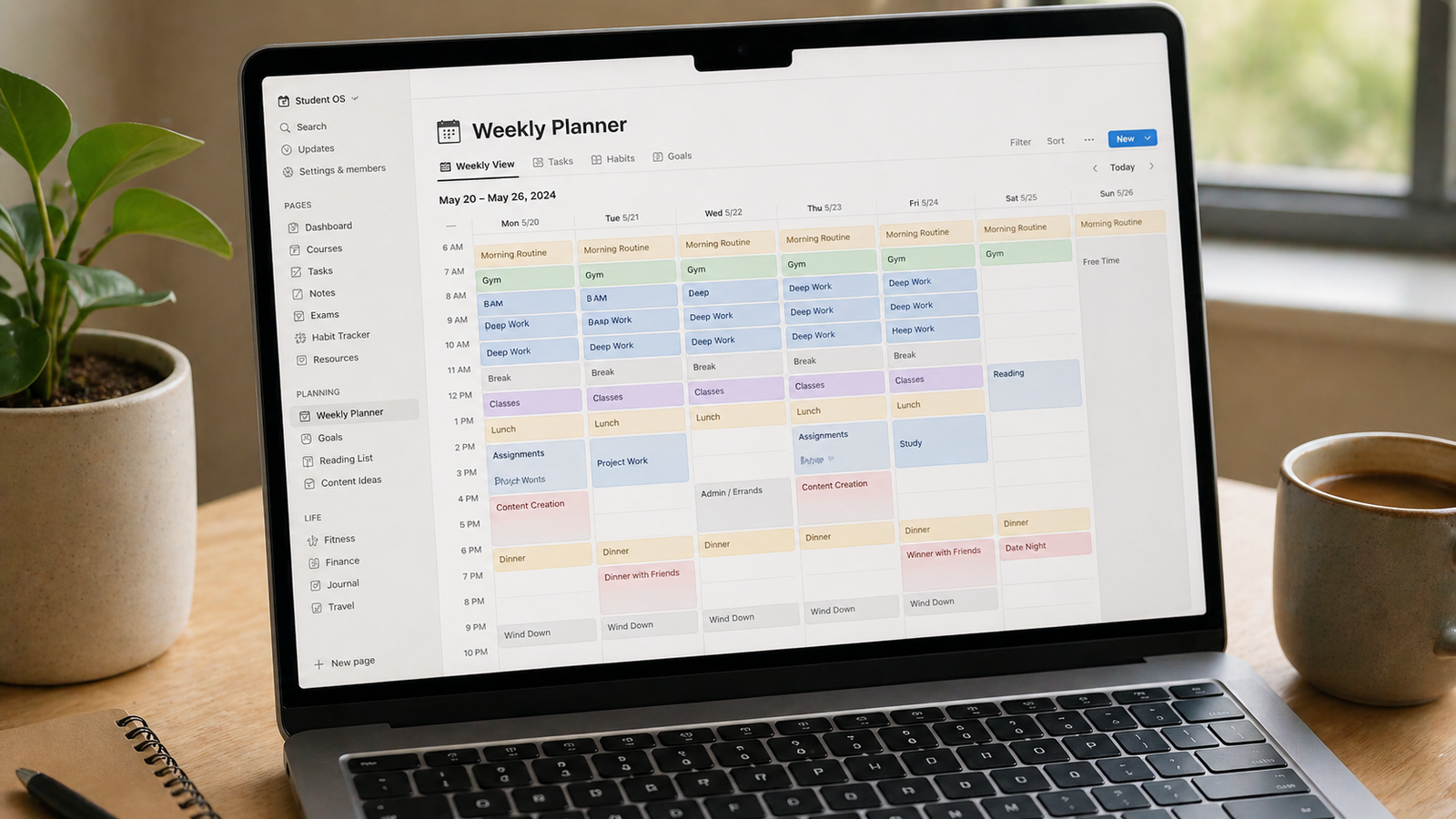
Here's a system that actually works for long-term balance. Every Sunday, take ten minutes to look at the week ahead. That's it. Ten minutes.
Here's the order that matters:
- Identify the Non-Negotiables. Classes, work shifts, anything that has a fixed time. These are immovable. Write them down first.
- Pinpoint the Big Socials. Is there a birthday dinner? A concert? A game night you actually care about? Put it in the calendar before anything else.
- Fill in the Study and Self time. Build your deep work blocks around those events, not the other way around.
When you plan your social life first, you stop viewing school as something that "gets in the way" of living and start viewing it as the work that makes your life possible. That shift in mindset changes everything.
Most students do this backwards. They plan school first, hope social time will appear in the gaps, and then feel guilty when it does. Plan it the other way around and watch how much more motivated you feel to actually use your study blocks.

The Non-Negotiables List
Before we wrap up, here are five rules that students who actually master this balance tend to follow. They're not complicated, but they require consistency.
1. Sleep is not optional. You cannot think clearly, retain information, or regulate your emotions on five hours of sleep. Six hours minimum. Seven is better. Eight is the goal. A well-rested student who studies for two hours beats an exhausted student who "studied" for eight every single time.
2. Your GPA is not your personality. Getting a B doesn't make you a failure. Getting a 4.0 while being miserable and friendless doesn't make you successful. Keep some perspective.
3. Not every hangout needs to be a big event. Balance is built in small moments. A 20-minute walk with a friend. A shared meal with your roommate. A spontaneous trip to grab coffee between classes. You don't need to clear your whole schedule to have a social life.
4. Protect your mornings. Most students waste their highest-energy hours scrolling in bed. Even 90 minutes of focused work before noon can free up your entire evening.
5. Audit your week honestly. Every Sunday, ask yourself: did I actually do focused work, or did I do the performance of studying? Did I actually spend quality time with people, or was I physically present but mentally somewhere else? Honest answers help you adjust.
Final Thoughts
You're only an undergrad once. Ten years from now, you won't remember the exact grade you got on your sophomore literature quiz, but you will remember the friends who stayed up until 3 AM talking about nothing with you in the dorm hallway.
Protect your GPA. Absolutely. Show up, do the work, take it seriously. But protect your memories too.
The goal isn't to survive university. It's to actually live it.
You can have both. The students who figure that out early? They're the ones who look back without regret.
Want more practical guides on making the most of your undergrad years? Join the Undergrad Vibes newsletter for weekly tips on studying smarter, building your career, and actually enjoying university while you're there.