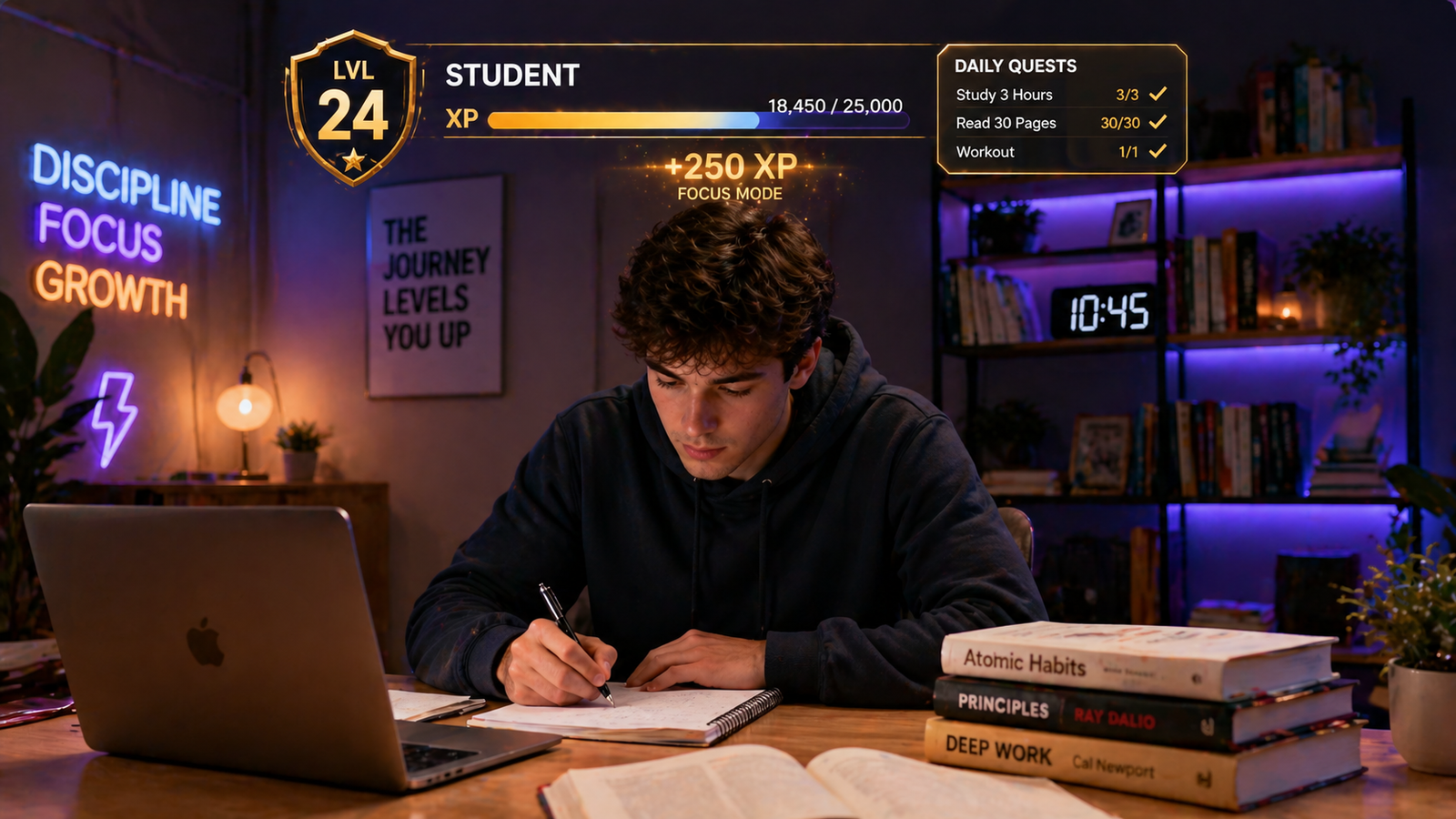
Meet Leo. Leo is a sophomore who can spend six straight hours grinding for a rare sword in a video game. He has no problem memorizing complex boss mechanics, navigating difficult maps, or staying focused during a high-stakes raid. But when Leo sits down to read a thirty-page history chapter, his brain shuts down in fifteen minutes.
Does this sound familiar? You are not lazy. Your brain is simply wired for the immediate feedback and clear progress bars of a game, while university life often feels like a four-year-long loading screen with no "Save" button. In 2026, the key to surviving undergrad is not more willpower. It is better game design.
We are going to stop viewing your degree as a chore and start viewing it as a massive, open-world RPG. It is time to hack your dopamine and turn your GPA into a High Score.
The Psychology: Why Games Win (and Lectures Lose)
To beat the system, you have to understand the code. Gamification works because it targets the Octalysis Framework, a model that identifies the eight core drives of human motivation. Most university lectures only target one drive: Avoidance (the fear of failing). Games, however, target Development, Accomplishment, and Epic Meaning.
When you play a game, you get a dopamine hit every time you see an XP bar move. In school, you might work for three months before seeing a single grade. To bridge this "XP Gap," you have to create your own feedback loops.
Phase 1: Define Your Character Class
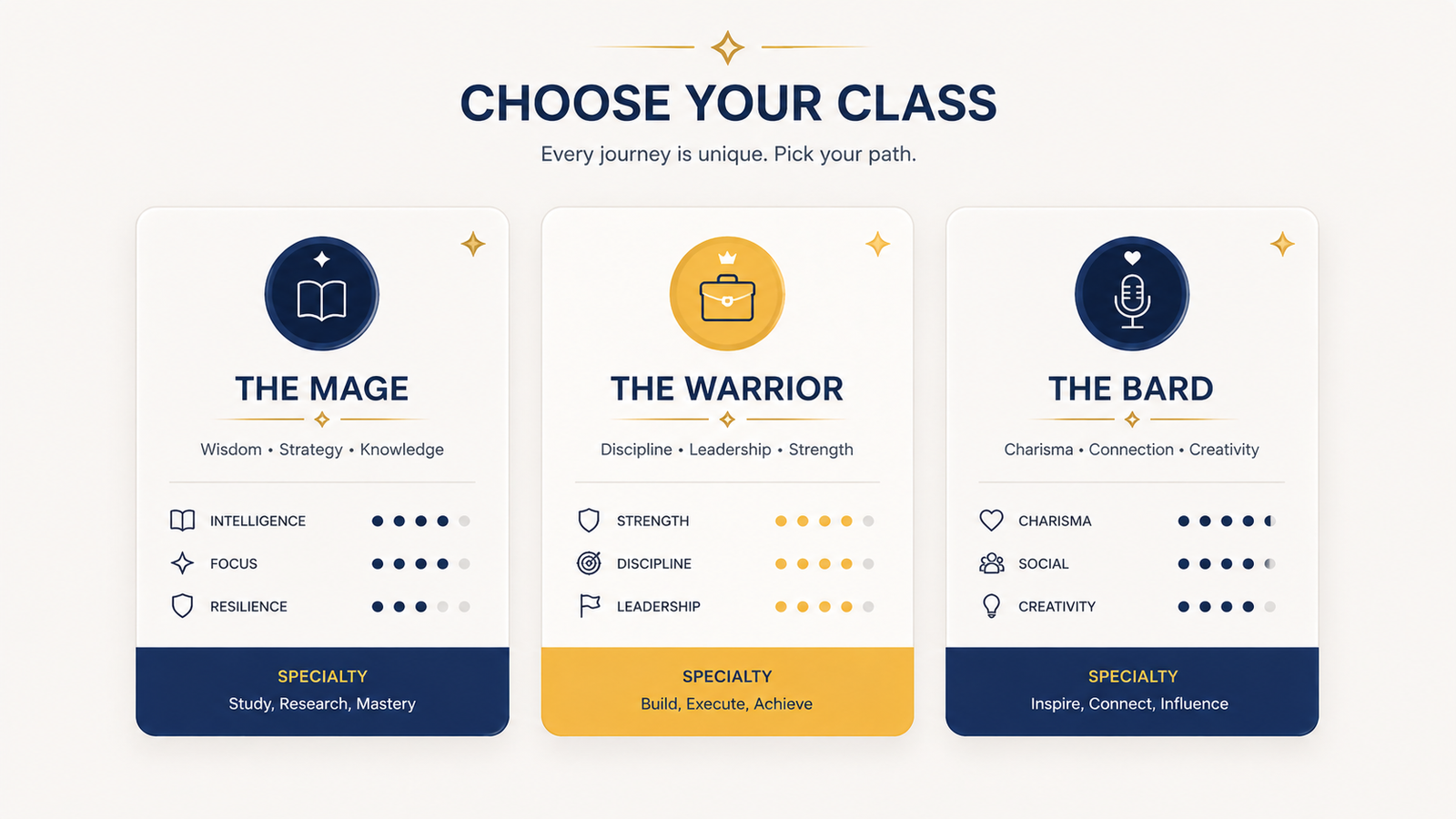
In any good RPG, you don't start as a master of everything. You pick a class that fits your playstyle. To gamify your life, you need to decide what kind of "Player" you are in the university meta.
The Mage (The Academic)
Your focus is high Intelligence and Wisdom. You live for research, deep dives into the library, and crushing the lore of your major. Your special moves involve critical analysis and connecting complex theories.
The Warrior (The Grinder)
Your focus is Strength and Constitution. You are all about the career hustle, landing internships, and building a resume that passes every AI filter. You thrive on high-pressure deadlines and tanking heavy workloads.
The Bard (The Networker)
Your focus is Charisma. You excel at group projects, student government, and building the social GPA that leads to job referrals later. Your buffs come from knowing exactly who to talk to when you need help with a difficult assignment.
Once you pick a class, your tasks start to feel like Skill Points. That boring public speaking elective? That is just +5 to your Charisma stat. That difficult coding assignment? That is a +10 Intelligence boost.
Phase 2: Building Your Quest Log
The reason we procrastinate is that "Finish Thesis" is a terrifying, abstract goal. Games never give you a quest called "Beat the Game." They give you "Collect 5 Herbs" or "Talk to the Blacksmith."
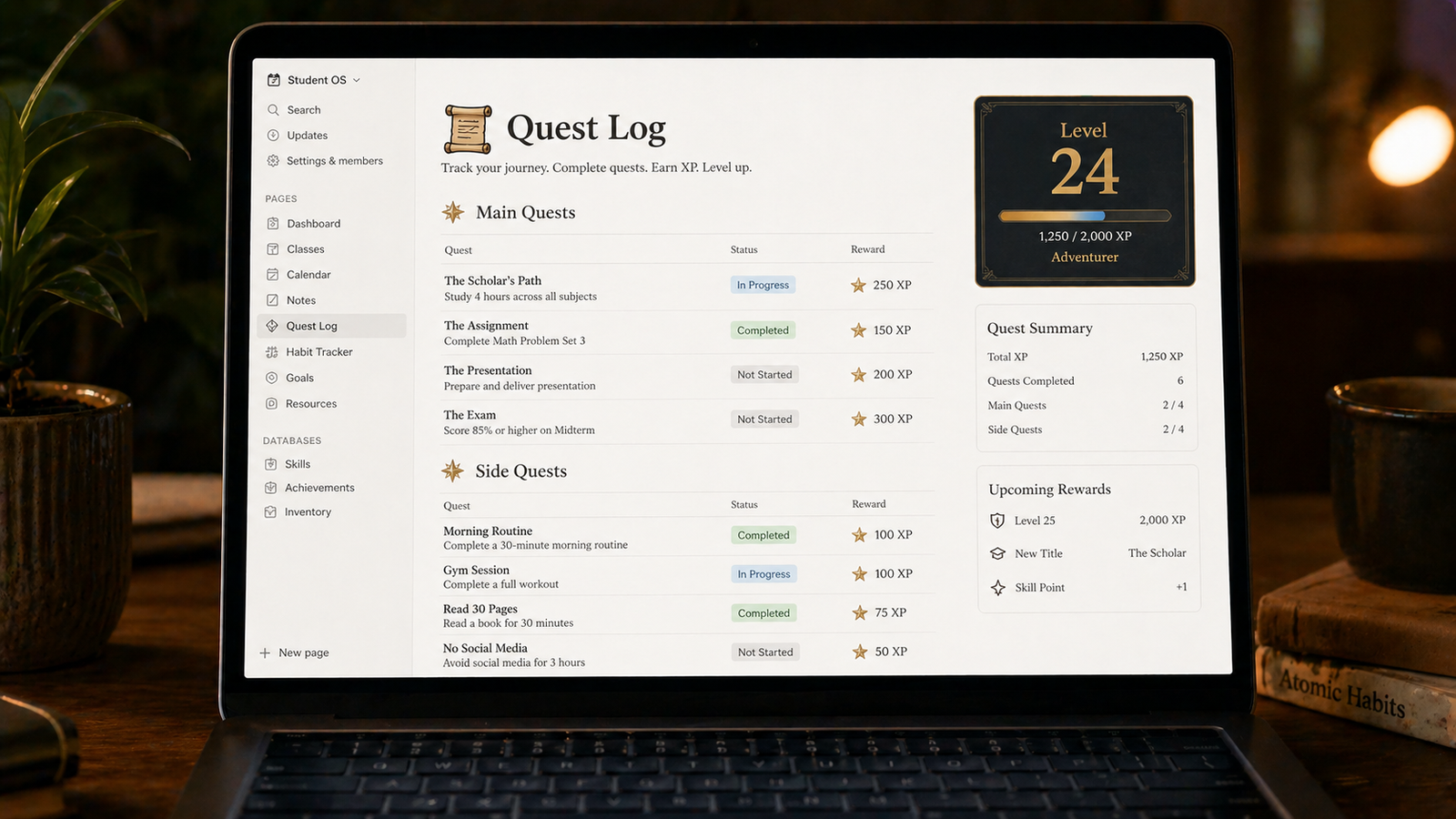
You need to turn your syllabus into a Quest Log.
Dailies (The Grind)
These are your repeatable tasks. Reading ten pages, drinking water, or checking your university email. Completing these gives you a small, consistent XP boost. If you miss a Daily, you lose HP (health points), which you can track by losing a small privilege, like your favorite streaming service for the evening.
Side Quests (The Buffs)
These are optional but high-value tasks. Attending a professor's office hours or joining a networking event. Side quests provide unique items, such as a letter of recommendation or a lead on a summer internship.
Main Quests (The Story Arcs)
These are your midterms and finals. They require preparation and potions (read: coffee and sleep) to complete successfully. Breaking a Main Quest into smaller Checkpoints ensures you don't get hit with a Game Over on the final day.
The Dopamine Menu: Every time you complete a Quest, you deserve Loot. This could be fifteen minutes of gaming, a favorite snack, or a quick scroll through Instagram. The key is to never take the loot before the quest is done.
Phase 3: Boss Fights and Co-Op Mode
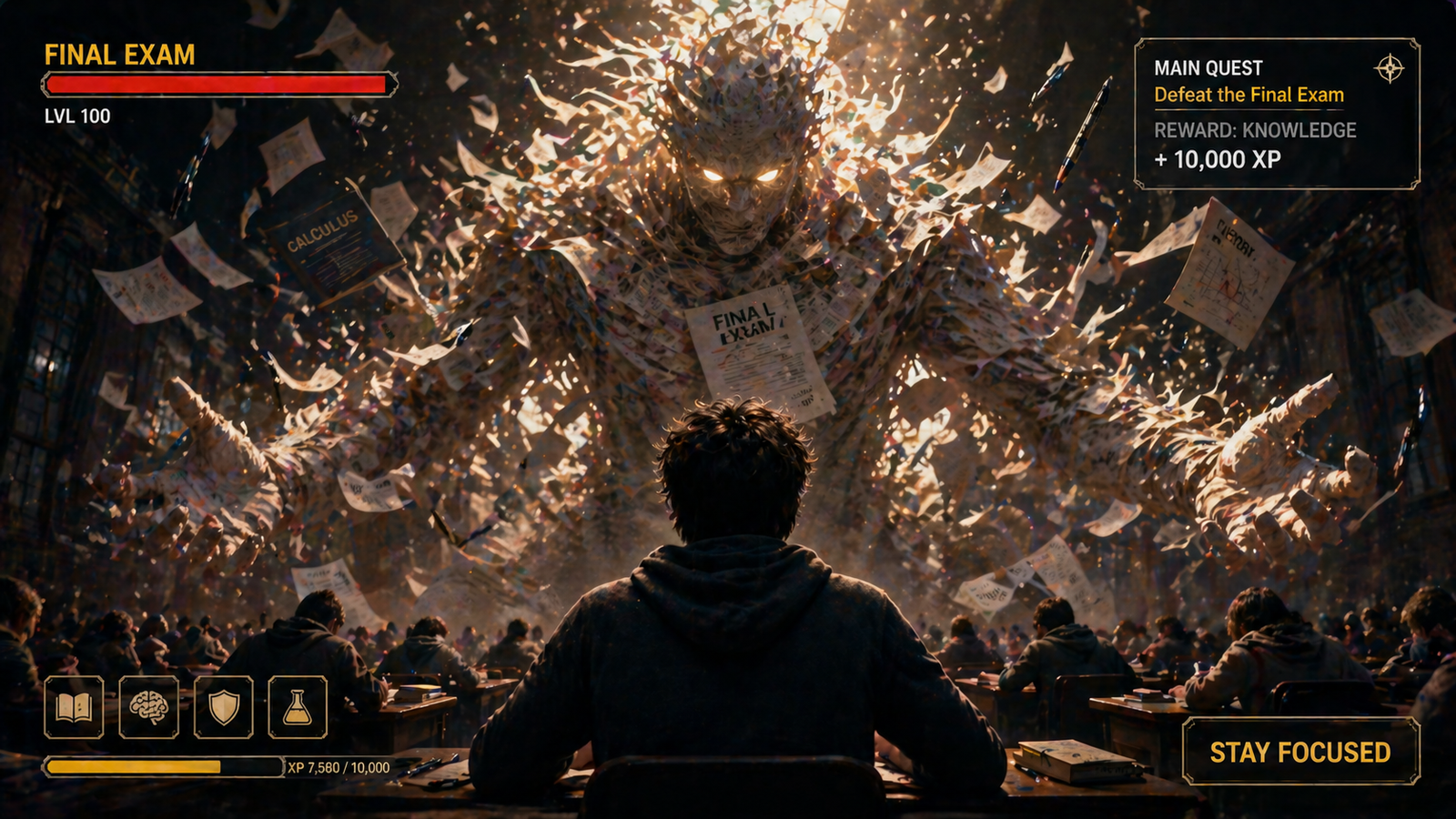
Midterms and finals are the Boss Fights of the semester. You wouldn't walk into a boss room without checking your inventory, and you shouldn't walk into an exam without a Battle Plan.
Mini-Bosses
Treat quizzes and weekly assignments as mini-bosses that help you learn the mechanics before the Final Boss. If you can beat the mini-boss, the Final Boss becomes predictable.
Co-Op Mode (The Party System)
Studying alone is playing on Hard Mode. Form a party with friends to tackle difficult subjects. Research shows that social support acts as a mental health buffer, reducing the stress of a difficult semester. Teaching a concept to a friend is basically a Critical Hit on the material.
Handling the Respawn
If you fail a test, it isn't a Game Over. It is a respawn. Look at the Combat Log (your graded paper), see where you took damage, and adjust your strategy for the next encounter. Every death in a game is just data. Every failed grade in university is just a signal to change your study method.
Phase 4: Equipping the Right Inventory
Every player needs the right tools. In 2026, there are apps designed specifically to turn your phone into a game console for productivity.
- Habitica: This app literally turns your to-do list into a pixel-art RPG where you earn gold and armor for finishing tasks. You can even join Guilds with other students to hold each other accountable.
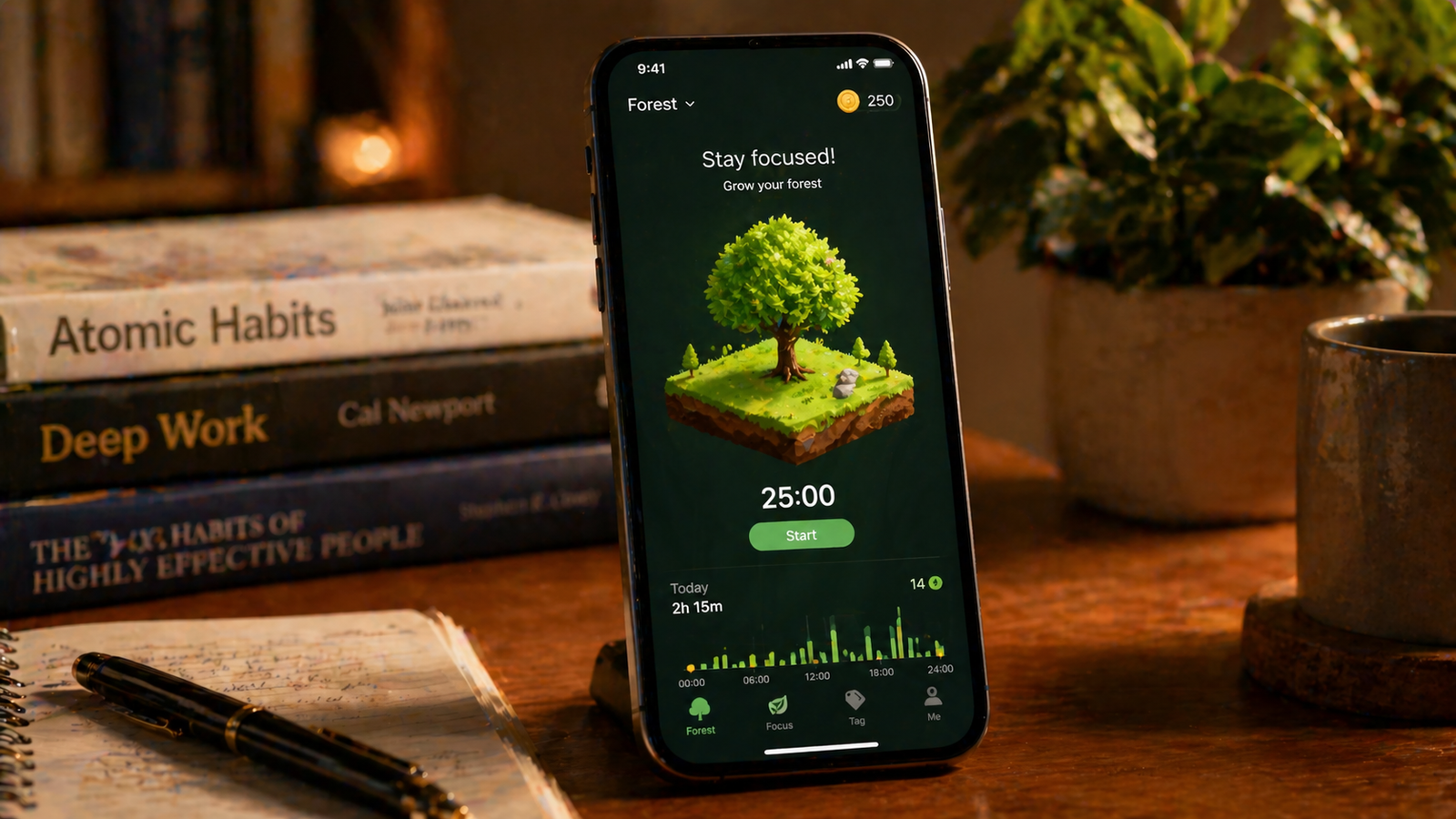
- Forest: A gamified focus app where you grow a digital tree while you study. If you leave the app to check social media, the tree dies. It is a high-stakes Focus Quest that uses the Loss Aversion drive to keep you off your phone.
- Notion: Use Notion to build your personalized Quest Log and Skill Tree. You can create a Dashboard that tracks your current level, your active quests, and your Inventory of study resources.
Advanced Mechanics: The Flow State Buff
To truly level up, you need to trigger Flow State. This is the gaming equivalent of being "in the zone." To reach it, the challenge must perfectly match your skill level.
- If a task is too hard: You get anxious. Break it into smaller Tutorial steps.
- If a task is too easy: You get bored. Add a Time Trial element to make it a challenge.
By constantly adjusting the difficulty of your study sessions, you can stay in the Flow State for hours, just like you do when playing your favorite RPG.
The Final Achievement: Graduation and Beyond
University is a long game. There will be times when the grind feels repetitive and your HP is low. But remember: you are the protagonist of this story. Every boring lecture and every late-night study session is adding to your total XP.
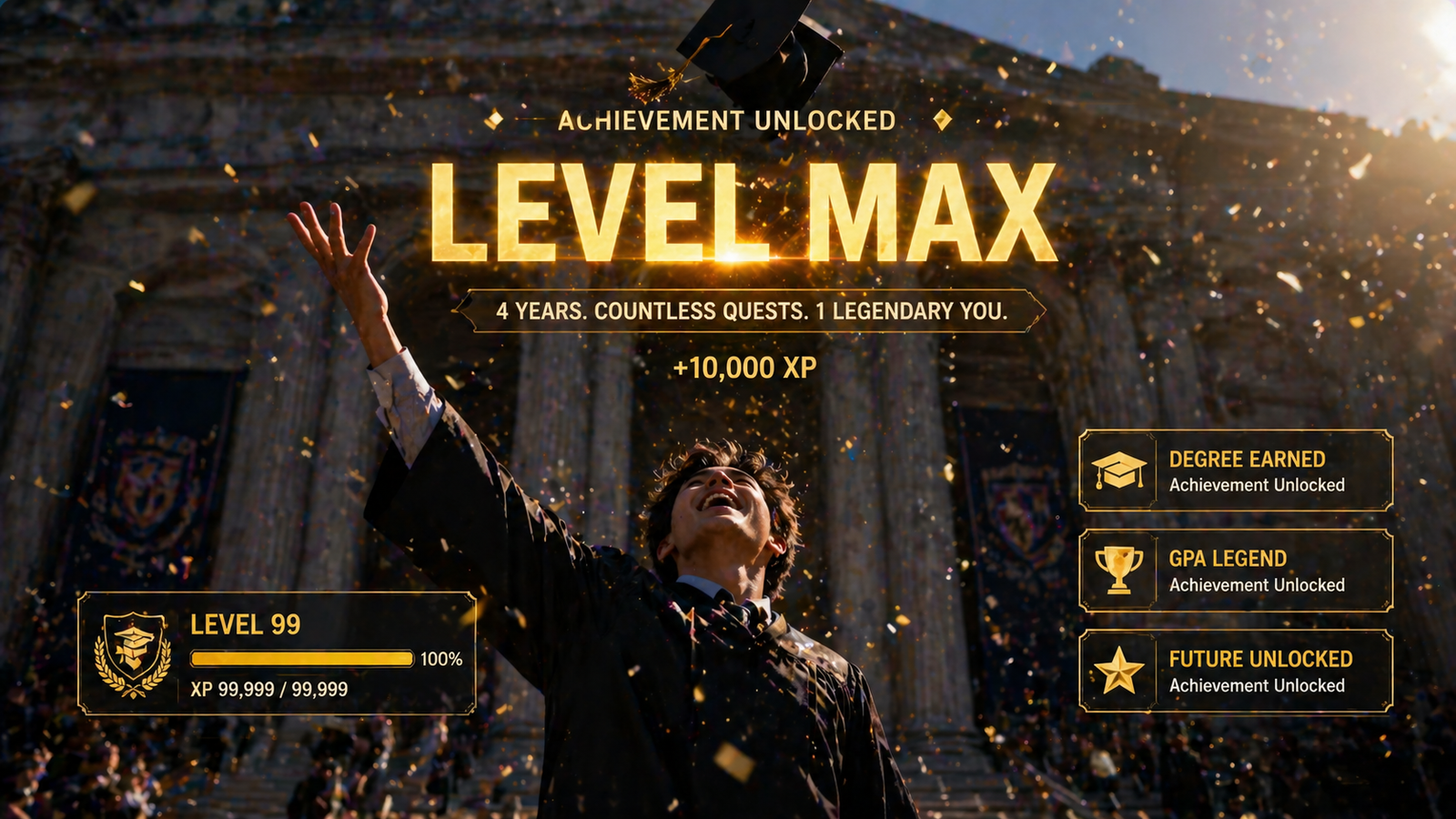
When you finally walk across that stage, it won't just be a graduation. It will be a Level Max achievement unlocked. You will have built a Skill Tree that makes you a top-tier candidate in the job market, ready to take on the endgame of your professional career.
Ready to start your first quest? Join the Undergrad Vibes newsletter for weekly strategies, tools, and tips to help you level up your academic career.