Is the Computer Science Degree Dead? The Hard Truth About Coding in 2026
It is a quiet Tuesday night in the computer lab. You have been staring at a LeetCode problem for three hours, trying to optimize a binary search tree. Suddenly, you see a notification on your phone. A new AI agent has just been released that can Vibe Code an entire social media platform from a single voice prompt.
You watch the demo in horror. The AI builds the backend, connects the database, styles the frontend with perfect liquid design, and deploys it to the cloud in forty seconds. You look back at your half-finished binary search tree. A cold realization hits you: is this degree a relic?
Real talk: if you are in a Computer Science program to learn how to write boilerplate code, the degree is not just dead. It is buried. But if you understand that the role of a Software Engineer is evolving into a System Architect, your degree is actually more valuable than ever.
In 2026, we are moving past the "Hello World" era. Here is the hard, research-backed truth about what it takes to survive the tech landscape today.
Phase 1: The AI Elephant in the Room
Let us be brutally honest about the state of the industry. The traditional Junior Developer role is in a state of crisis. In the past, companies would hire undergrads to handle grunt work like writing CSS, building basic API endpoints, and fixing simple bugs. Today, those tasks are essentially free.
Vibe Coding vs. Engineering
There is a massive difference between Vibe Coding and Software Engineering. Vibe Coding is about aesthetics and immediate results. It is great for building a landing page or a prototype. Engineering, however, is about building systems that do not break when a million people use them at once.
AI can write syntax. It can even write clever functions. But it currently struggles with three critical pillars:
- Systemic Security: AI is notorious for introducing subtle security vulnerabilities that a human engineer must audit.
- Massive Scalability: AI can build a small app, but it struggles to understand how that app interacts with a legacy enterprise system.
- Creative Problem Solving: AI generates solutions based on past data. It cannot invent a fundamentally new way to solve a problem.
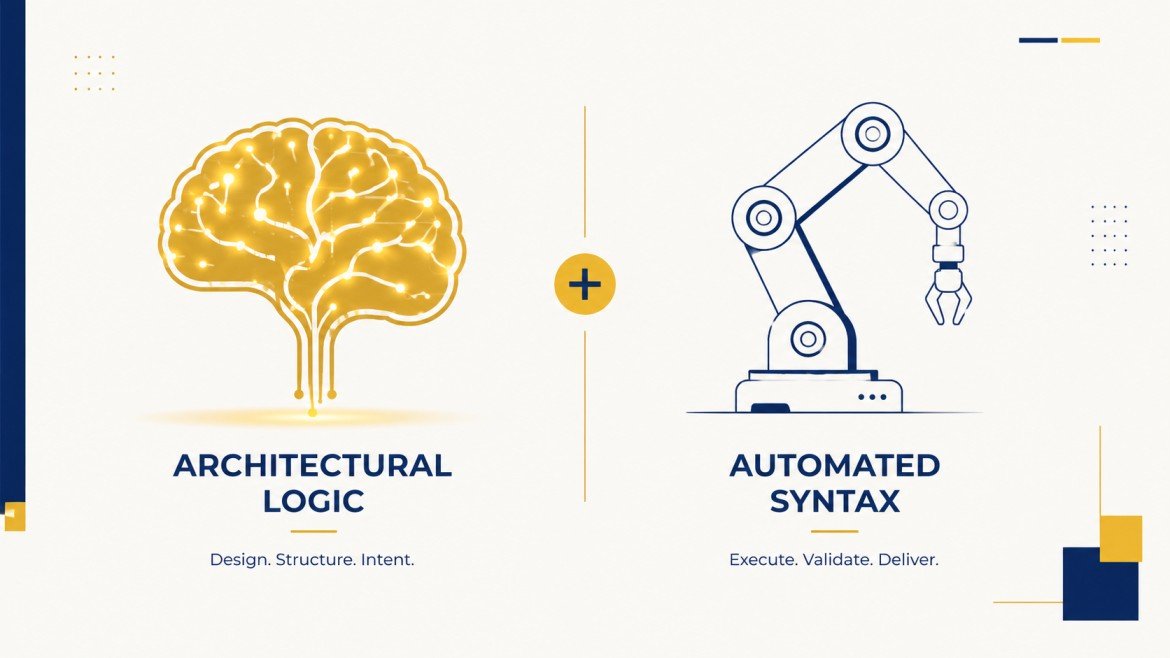
The reality check is simple. Syntax is now a commodity. Logic and architecture are the new premium skills.
Phase 2: Why Your Professor is Still Relevant
You might think that learning Data Structures and Algorithms (DSA) is a waste of time when an LLM can write them for you. You are wrong. In 2026, DSA matters more than ever because you are no longer the writer. You are the editor.
Theory as a Shield
If you do not understand the underlying theory of how a machine works, you are at the mercy of whatever the AI generates. If the AI suggests a solution that is inefficient or prone to memory leaks, and you do not have the theoretical background to catch it, you are a liability to your team.
Understanding how the machine works is the only way to stay ahead of the machine. Your degree provides the foundational mental models that allow you to debug AI-generated code effectively. This is why top-tier programs have pivoted their curriculum to focus on Human-AI Interaction and Advanced System Design.
Phase 3: The New CS Skill Tree
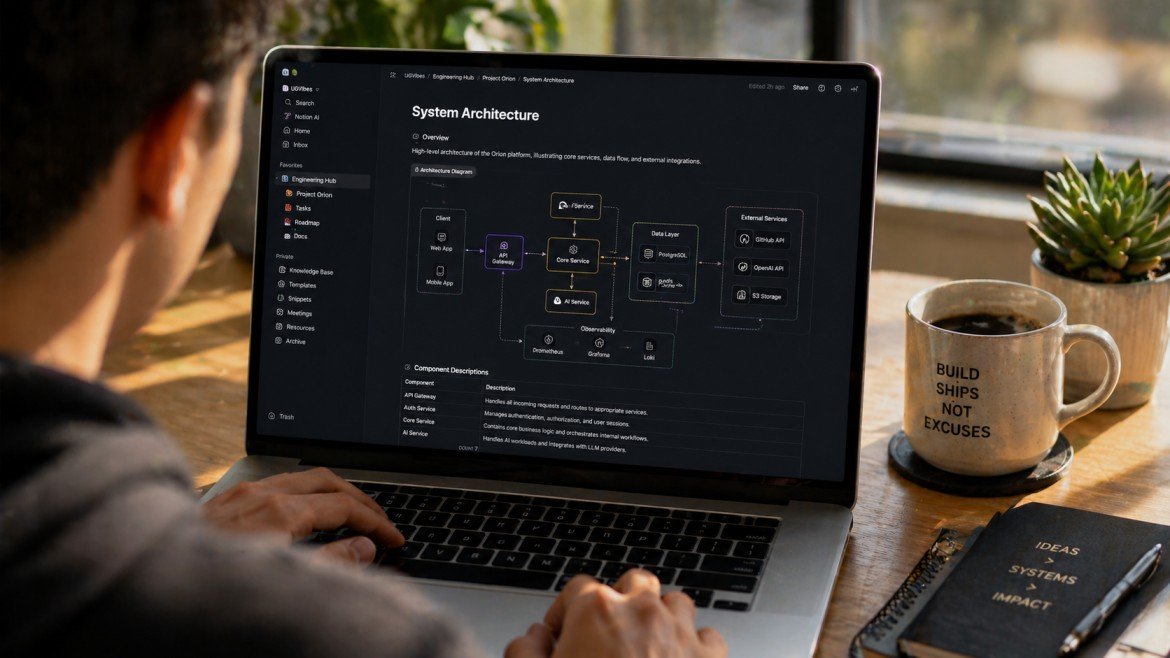
If you want to be employable when you graduate, you need to stop focusing on frameworks and start building your New CS Skill Tree.
Architectural Thinking
Instead of focusing on how to write a loop, focus on how three services interact. You need to be able to design the blueprint of an application. This includes understanding microservices, database management, and the Model Context Protocol (MCP) for AI interaction.
Security and Scalability Auditing
As AI-generated code floods the market, companies are desperate for engineers who can perform security audits. This involves looking for the hallucinated code or insecure practices that AI often hides.
Soft Skills as Technical Skills
In 2026, communication is a technical skill. You need to be able to explain why a system was built a certain way to stakeholders who might be tempted to replace you with a cheaper AI solution. Project management, team collaboration, and ethics are now core parts of the tech stack.

Phase 4: The Economics of the 2026 Labor Market
The shift in the labor market is not about AI replacing humans. It is about AI changing the unit of work. In 2020, a junior dev was hired to write 100 lines of code. In 2026, a junior dev is hired to manage an AI agent that writes 1,000 lines of code.
The Augmented Engineer Model
Companies are moving toward the Augmented Engineer model. They want graduates who can leverage Large Language Models to increase their output tenfold while maintaining the critical thinking to ensure that output is secure and efficient. This means your value is no longer your typing speed or your knowledge of Python syntax. Your value is your ability to verify the accuracy of a generated solution.
The Redefinition of "Junior"
While some claim junior roles are dying, research suggests they are simply being redefined. The new Junior role looks like a Junior Architect. You will be expected to handle high-level prompts, integrate Model Context Protocols, and manage automated testing agents. If you can do this, you are not just a junior. You are a force multiplier.

Phase 5: The Technical Debt Crisis
One of the biggest reasons the CS degree is still alive is the looming Technical Debt Crisis. When companies use AI to generate massive amounts of code quickly, that code often contains hidden flaws. It is often unoptimized or redundant.
In two or three years, companies will be drowning in AI-generated technical debt. They will need engineers who understand the deep fundamentals of Computer Science to untangle the mess. A student who only knows how to prompt an AI will not be able to fix these deep-seated system failures. Only someone with a rigorous academic foundation in system architecture and memory management will be able to perform that surgery.
Phase 6: How to Future-Proof Your Degree
So, how do you make sure your four years in school actually lead to a job? You have to build a digital portfolio that proves you can do what a robot cannot.
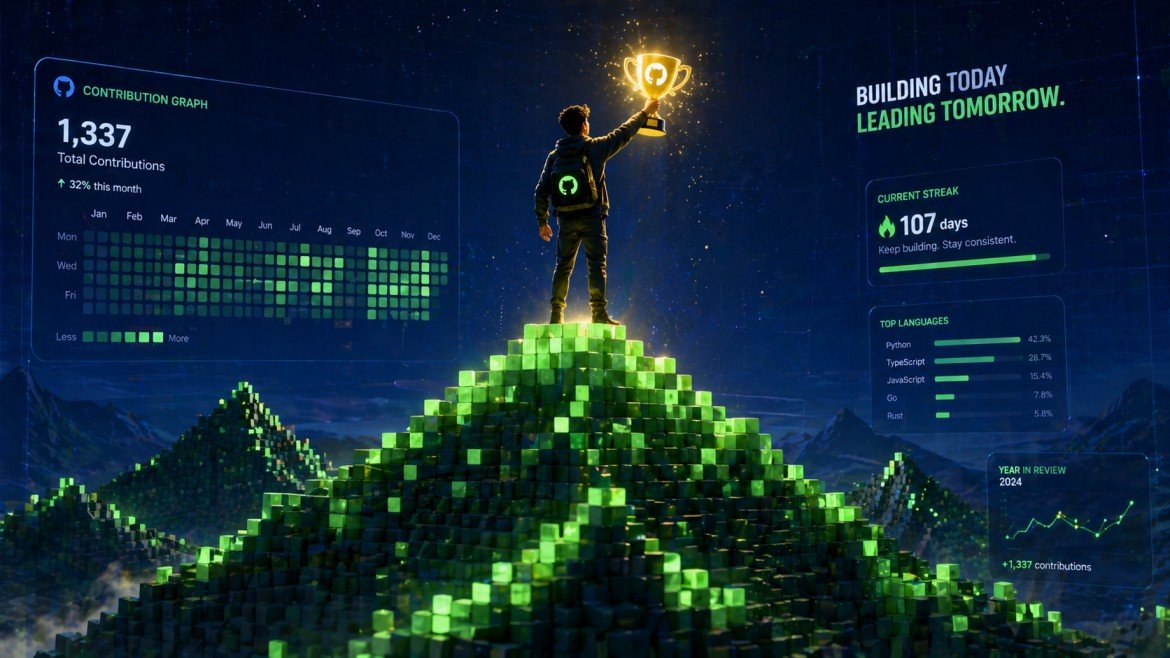
The GitHub "Green Square" Graph
In 2026, your GitHub profile is your real diploma. But companies are looking for more than just personal projects. They want to see:
- Open Source Contributions: Proving you can work in a complex, existing codebase.
- AI-Enhanced Projects: Showing you know how to build with AI agents, not just against them.
- Documentation: Proof that you can explain your logic so other humans can understand it.
Niche Down
Do not just be a Full Stack Developer. That role is too broad and easily automated. Niche down into specialized fields like:
- Fintech Security: High stakes, high complexity.
- AEO and GEO (Generative Engine Optimization): Helping companies ensure their content is picked up by AI search engines.
- AI Ethics and Governance: Ensuring AI systems are fair and unbiased.
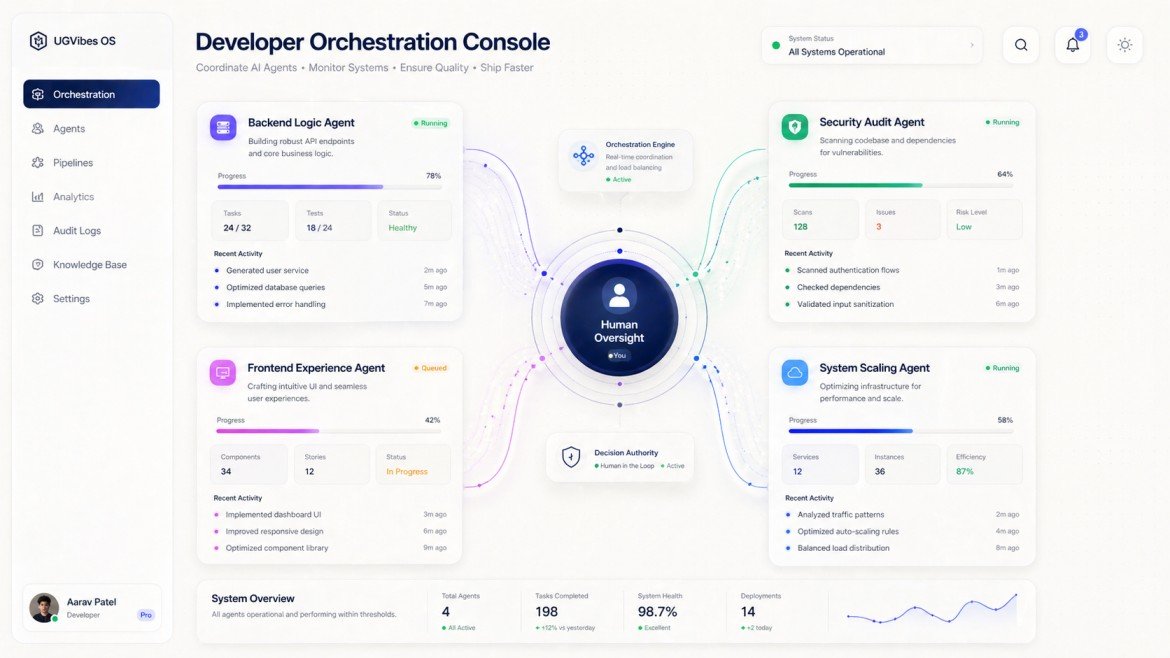
Phase 7: Building for the "Agentic" Future
By the time you graduate, most apps will not be static pieces of software. They will be Agentic Systems: software that can think, plan, and execute tasks on behalf of the user.
Learning to build these systems requires a deep understanding of:
- Vector Databases: How AI "remembers" things.
- Context Windows: How much information an AI can process at once.
- Orchestration Layers: How to coordinate multiple AI models to solve a single problem.
This is the new frontier of Computer Science. Your degree gives you the mathematical and logical foundation to understand these concepts, while the Vibe Coders will only be able to use the basic, surface-level tools.

The Vibe Coding Opportunity
Here is the secret. AI is not a threat. It is a force multiplier. If you have the foundational knowledge of a CS degree and the speed of an AI tool, you are unstoppable. You can build a startup in a weekend. You can handle the workload of three developers.
The students who are struggling are the ones who refuse to adapt. The students who are thriving are the ones who use the degree to understand the Why and use AI to handle the How.
The Bottom Line
Is the Computer Science degree dead? No. But the era of the Lazy Coder is over.
You are not being replaced by AI. You are being replaced by a person using AI better than you. Use your time in undergrad to master the logic, the architecture, and the theory. Then use every tool in your inventory to build the future.
Want weekly career tips built for students navigating tech in 2026? Subscribe to the Undergrad Vibes newsletter for real advice on AI tools, internships, and breaking into tech without the corporate fluff.